When most people hear the phrase “drug addiction,” they picture a stranger on the fringes of society. However, public health experts warn that the line between casual self-medication and a destructive, chronic disorder is dangerously thin, and it is quietly moving through university campuses and homes.
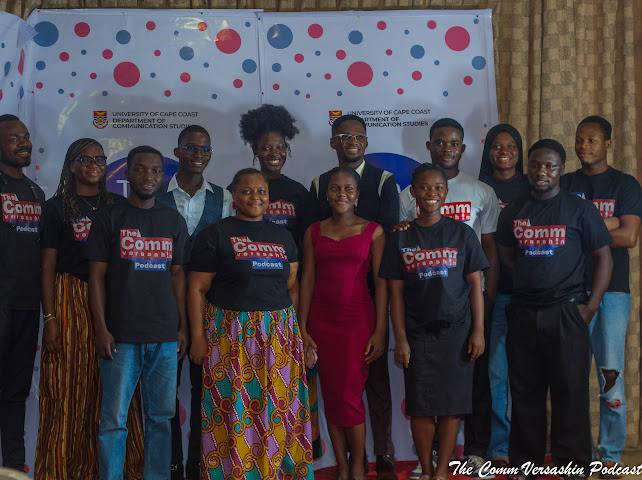
During a recent episode of The CommVersashin Podcast, a health professional and student advocate came together to dissect the surging crisis of substance use disorders among the youth, breaking down the subtle warning signs and calling for an urgent shift in how families approach it.
Mr. Michael Amoako, a public health advocate and a registered nurse at the University of Cape Coast, shared his idea on drug addiction, clarifying that it is fundamentally a substance use disorder and a chronic condition that develops over a prolonged period. He explained that individuals do not become addicts overnight; rather, it always begins with indiscriminate misuse or abuse where a person gradually loses control until they can no longer function normally without the substance.

Mr. Amoako stated that while codeine-infused cough syrups remain statistically the most abused substance in Ghana, there has been a worrying surge in the misuse of pharmaceutical opioids, such as “Red-Red” (an abusive, high-dose formulation of tramadol), alongside weed and shisha.
“Before one gets to that point (of addiction), the person might have started with abuse. Individuals have lost control, and then without the drugs in question they are unable to function.”
Adding a student perspective, Mr. Joshua Sowah Ablorh, a third-year nursing student, shared his viewpoint on the psychological traps of substance use. He noted that addiction manifests when an individual compulsively continues to use a substance despite being fully aware of its harmful physical and social effects. He further distinguished between legal drugs being abused by youth, such as alcohol and tramadol, and illegal substances like marijuana.

The speakers heavily tied the root causes of youth drug abuse to modern psychological pressures. Mr. Amoako observed that the current generation of young people is exceptionally vulnerable due to an unprecedented level of exposure to external stimuli and stress. He explained that common mental health struggles like depression, anxiety, exam stress, and even insomnia frequently compel students to self-medicate. Shockingly, he noted that the crisis does not spare the medical community, pointing out that even working health professionals abuse substances to cope with severe workplace stress.
Mr. Ablorh pinpointed peer pressure and the desperate need for social validation as the most significant drivers of addiction among young people. He noted that the fear of rejection drives many to experiment with drugs in social settings like clubs, while others fall victim to pure curiosity fueled by friends who promise them a sense of “euphoria” or a quick fix for stress.
“There’s that form of socialization that exists: I want to belong, and the fear of being rejected by my friend or a colleague means that at the end of the day they would want to do anything or the best they can to please their friend.”
The consequences of this epidemic extend far beyond the user. Biologically, Mr. Amoako warned that the indiscriminate intake of these chemicals severely targets vital organs, risking liver disease, kidney failure, heart complications, and acute respiratory depression.
Socially and academically, Mr. Ablorh added that addiction completely alters a student’s priorities, stripping away their motivation to study, attend lectures, or maintain healthy relationships, ultimately leading to isolation and severe academic decline.
For families, the burden is both emotional and financial. The speakers noted that parents often experience profound emotional distress and financial strain trying to fund unexplained expenses or future rehabilitation. They urged parents to look out for critical warning signs, including sudden social withdrawal, secretive behavior, uncharacteristic demands for money, and drastic changes in personal hygiene or dress style.
Discussing the path forward, both speakers agreed that the ultimate solution must begin within the family unit. Mr. Amoako critiqued traditional African parenting styles that overemphasize rigid discipline at the expense of open communication. He urged parents to make the home a safe space where children feel comfortable discussing relationship failures, roommate friction, and academic anxieties without the fear of immediate judgment.
The panel also spoke about the role of rehabilitation centers, highlighting that they offer holistic care combining physical, psychological, and spiritual support. Crucially, Mr. Amoako reminded viewers that recovery is a non-linear process and that a temporary setback should never be viewed as a definitive failure.
“If you are addicted to something and you put in effort to overcome it, bear in mind that relapse is not failure. It means you’re actually trying. And so it is a process of time.”
In their closing remarks, the speakers implored young people and professionals alike to break the stigma and step out of the shadows. Mr. Ablorh reminded those on the path to dependency that they still have the power to turn back if they confide in family or university counselors. Mr. Amoako left the audience with a powerful final reminder: “It is very, very normal for you to seek help when you are going through any emotional or mental challenge; do so before it’s too late.”
Drug addiction is not far from you than you think. Make conscious efforts to end it now!